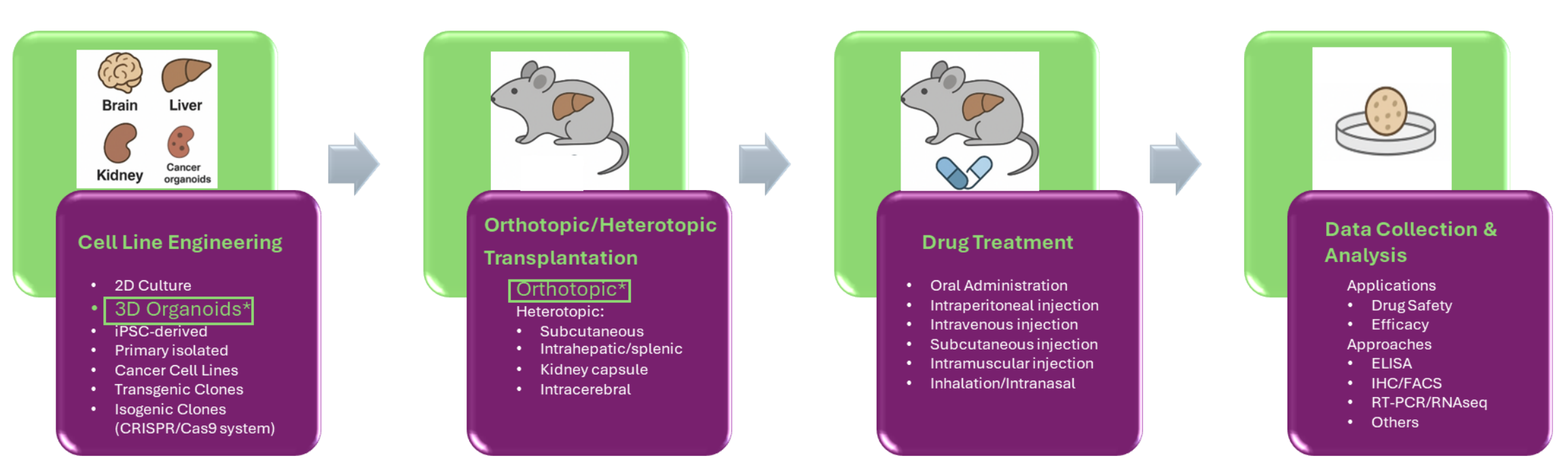
Our in vivo organoid platform offers a transformative solution for drug discovery, combining the accuracy of human biology with the complexity of a living system. While traditional in vitro organoids provide valuable insights, they lack the systemic cues of blood supply, metabolism, and organ interactions. Conventional animal models, meanwhile, often fall short in predicting human outcomes. Our approach bridges this gap by transplanting pre-made human organoids—brain, liver, kidney, and more—into the corresponding in situ locations of specialized mice.
These humanized mice serve as powerful disease models, enabling both safety and efficacy testing in a single system. The transplanted organoids integrate with host vasculature and receive systemic signals, ensuring clinically relevant pharmacokinetic and pharmacodynamic responses. Multiple human organoids can be engrafted into the same mouse, providing a unique opportunity to assess therapeutic benefit in one tissue while simultaneously monitoring potential toxicity in others.
This platform also supports personalized medicine. By deriving organoids from patient-specific iPSCs, we can create customized models that capture genetic backgrounds and disease-specific phenotypes, offering new opportunities in rare disease research, precision oncology, and individualized therapy development.
For pharmaceutical and biotech partners, the benefits are clear: faster and more predictive drug screening, early toxicity detection, reduced reliance on multiple animal studies, and higher translational relevance. In a field where majority of drug candidates fails in early trials, our in vivo organoid mice provide a competitive edge—streamlining R&D pipelines and accelerating the path to safe, effective therapies.
Besides the orthotopic transplantation of the 3D organoids, we also offer other regular services, including but not limited to, 2D culture of different cell types, through heterotopic transplantation approaches.