At I-Link Bio, we provide customized in vivo mouse services to help researchers and biotech partners bring their discoveries closer to the clinic. We recognize that no two projects are alike, so our approach is built around flexibility, precision, and collaboration. Whether you need support for early-stage proof-of-concept studies or advanced disease models, our team delivers solutions tailored to your unique research goals.
Our services cover a wide range of therapeutic areas, including oncology, immunology, and metabolic disorders. From designing study protocols to selecting or developing the right mouse models, we ensure each project is set up for meaningful, reliable results. We also offer customized dosing strategies, biomarker evaluation, and comprehensive data analysis, giving you clear insights to guide decision-making.
With a strong focus on quality and regulatory standards, we are committed to delivering data you can trust. More than just a service provider, we aim to be a true partner—working closely with you to anticipate challenges, adapt to evolving needs, and accelerate progress.
By choosing our custom in vivo mouse services, you gain not only a technical resource but also a dedicated ally in advancing your research with confidence.
Custom Disease Mouse Models
Case Study
1. Mouse Model Characterization and Preclinical Studies
After generating a humanized knock-in (KI) model, we performed the following analysis for the client:
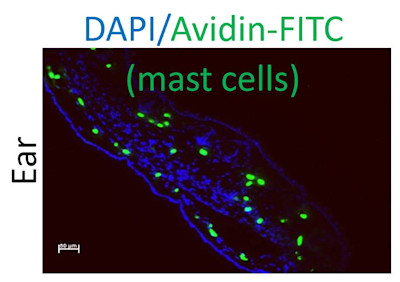
1-1. Quantitative Analysis of Mast Cells
Immunohistochemical (IHC) staining of ear tissue to assess mast cell infiltration
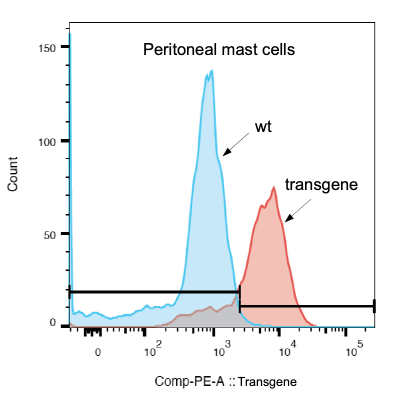
1-2. Transgene expression
Flow cytometric analysis of peritoneal mast cells to evaluate transgene expression
1-3. Preclinical Evaluation of Mast Cell Responses
Assessed Mast cell reactivity following treatment with test articles
2. Obesity Model and NASH model
Following model generation, we further developed disease models as below:
2-1. High-Fat Diet- Induced Obesity Model
This model assesses the impact of the modified gene on metabolic parameters such as lipid profile, glucose levels.
2-2. NASH Model (Non-Alcoholic Steatohepatitis)
The NASH mouse model recapitulates the key pathological features of human NASH, serving as a critical preclinical tool for studying disease mechanisms, testing therapeutic interventions, and evaluating efficacy of new drug candidates.
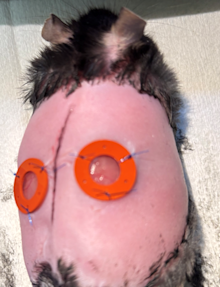
3. Excisional Wound Healing Model
A widely used method for studying wound healing and cutaneous regeneration in a preclinical setting. We used this model to investigate the effects of iPSC exosomes on skin wound healing in diabetic B6 db mice.
Biodistribution, PD, PK Studies
Non-clinical pharmacokinetic studies reveal the dynamic changes of drugs in vivo, obtain the basic pharmacokinetic parameters of drugs, and clarify the process and characteristics of drug absorption, distribution, metabolism, and excretion. Non-clinical pharmacokinetic studies play an important role in the evaluation of new drug research and development.
I-Link Bio has an experienced preclinical pharmacokinetic research team that can provide strong support and services for pharmacokinetic research in preclinical trial phase.
Teratoma Formation in Mice
Teratoma – Gold Standard for iPSC Characterization
A gold standard for establishing the pluripotency of iPSCs and ESCs is their ability to form cells of the three germ layers (endoderm, mesoderm and ectoderm). Teratoma are formed when pluripotent stem cells are injected into mice and spontaneously differentiate into cells of the three germ layers. Teratoma formation is considered as a standard index of iPSC or ESC. I-Link can do the teratoma assay for your iPSCs and ESCs so that you can move ahead with the critical aspects of your research.
For clinical iPSC derived products, it is critical that the differentiated cells are pure and free from undifferentiated iPSC contamination. Teratoma formation analysis is the method to test the purity and safety in vivo for iPSC differentiated cell products.
Successful Rate
Key Points | I-Link's Methods | Traditional Methods | ||
|---|---|---|---|---|
Type | mESC/miPSC | hESC | hiPSC | hESC |
Teratoma Formation Rate | 100% | 100% | 93.70% | 25-40% |
Differentiation | distinctive | distinctive | distinctive | poor |
Turnaround Time | 3-5 weeks | 5-8 weeks | 5-10 weeks | 12-18 weeks |
Cell Needed | 0.5-1 million/site | 0.5-2 million/site | 1-2 million/site | 3-5 million/site |